|
The President's Friend
Will L. Clark, general manager of the United Verde Mining Corporation, opened the letter and read it. "To Whom It May Concern: I would be very appreciative if Mr. Parker could be given a complete tour of your facilities. He is a very good friend of mine. Please afford him the utmost of your hospitality." Clark knew that his boss, the owner of the United Verde, Senator Clark, would keel haul him if anything went wrong with this particular guest. Even though Clark and the Senator shared the same surname, they were not related. At times like this he wished he were the pampered favored son. It would provide some cushion if things went wrong. He looked at the seal at the top of the letter and the signature below it for a long moment. "Theodore Roosevelt - President of the United States of America" He looked over to George Hull who sat, fat, smoking a cigar on the green brocade sofa on the other side of his large office. "Do you know anything about this?" The older man shook his head. "Only that this Parker is coming in on the morning train." Clark looked at the letter again, walked over to his office door, and opened it. "Berta, tell McCauley to get in here right away." He turned to Hull. "It would have been nice to have a little more notice." He looked out his large window at the scene across the way. The huge smelter was pumping out black smoke out of its three tall stacks. Ore cars were coming up out of tunnels in the mountain and running directly into the smelter. The mining operation was a well oiled machine moving full steam ahead. He liked what he saw. They were making money by the boatload. The smoke from the smelter's stacks smelled of pure profit. They were well in the black. Yes, he thought, he could give the President's friend a tour. A complete tour, however, would take days. There were miles of tunnels. A complete tour would be out of the question. An impressive tour, on the other hand, would be very easy. He pulled out his pocket watch and checked the time. 10:17. The train would be arriving in a little over an hour. He could see the depot from where he stood, just behind and above the smelter. 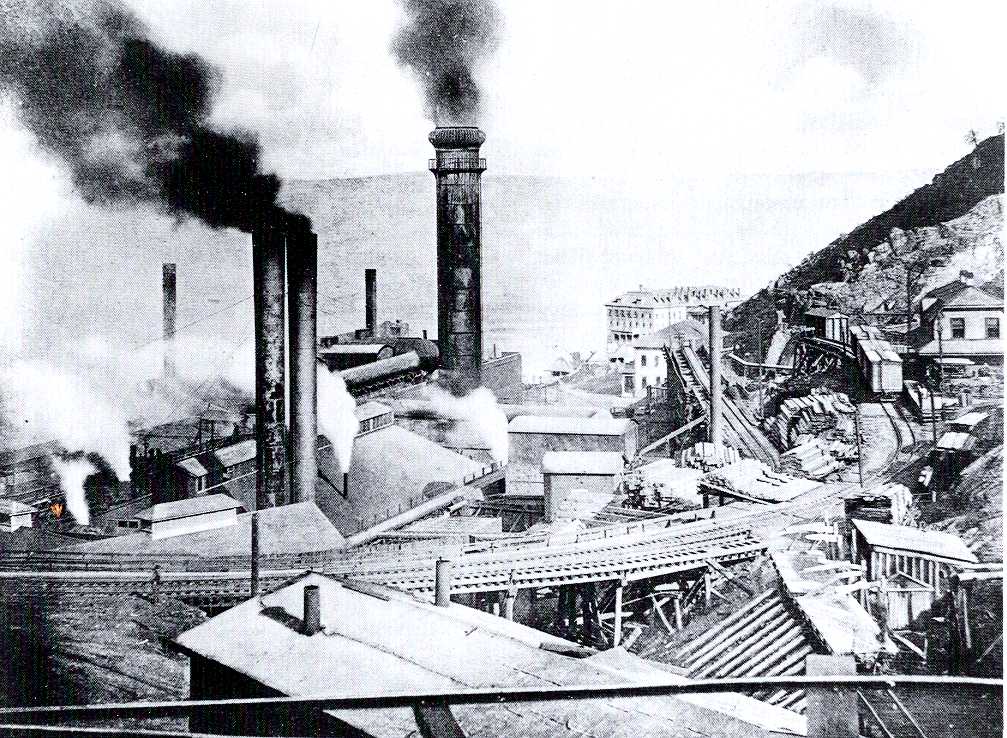 He heard a knock on the door and turned to see his assistant, William McCauley, sticking his head in. "You wanted me, boss?" "Yes, Bill, come in." The younger man stepped in, eager, shiny, and bright as a new copper penny. He was tall and trim and ambitious and wanted Clark's job. The older man didn't mind. He would turn the job over in his own good time. Until then, McCauley would serve him obediently and well. Until then, Clark would use his youth and energy to his own ends. "Bill, I need you to go over to the Montana and arrange for the suite. It seems as though we have a very important guest coming in on the train this morning." He held up the letter. "This is a letter from President Roosevelt requesting that we roll out the red carpet for a certain, Mr. Parker. After you take care of the suite, I want you to greet our guest at the depot with all due pomp and circumstance and escort him to the hotel. After he's settled in and eaten something, bring him back here." McCauley's eyes widened at the mention of the President. "Yes, sir, Mr. Clark. I'll take care of everything. Will there be anything else?" Clark thought for a second. "Yes. The company will foot the bill for Mr. Parker. Whatever he wants. Women, whiskey. Whatever. We want to make sure that the President's friend has nothing but good things to say about his stay here." "Of course. I understand. Nothing but the best for our guest." An hour later, McCauley stood on the platform of the train depot and watched the narrow gauge locomotive pull in. On its side in large gold filigree letters were the words - The Unite Verde and Pacific. The train came to a loud, smoky, screeching stop. The last car, just before the caboose, was one of Senator Clark's private cars. McCauley stepped in its direction, assuming that a friend of the President would be riding first class. As he reached the car, a tall erect man appearing to be in his fifties stepped on to the platform. He wore an expensive dark, broadcloth suit and a fashionable derby. His shoes gleamed with a fresh shine. He moved the confidence and authority of someone in power. As the smoke cleared, however, and McCauley was able to see the man's face more clearly, he was suddenly and completely thrown for a loop. He realized that he was looking at an Indian. The man's long black braids fell down the front of his expensive suit. His high cheekbones, aquiline nose, and leathered dark skin left no doubt of his race. McCauley stared at him with his mouth open. There must have been some mistake. He looked down the platform at the other twenty or so passengers disembarking. He saw no one else who could have been the expected guest. He looked back at the Indian and managed to blurt out a few words. "Excuse me, are you with the Parker party?" The Comanche looked at him with a look that he couldn't quite identify. It seemed to include amusement, forbearance, a slight condescension, and other emotions that he couldn't identify. Then he realized that the most shocking thing of all was the fact that the Indian had piercing light blue eyes. 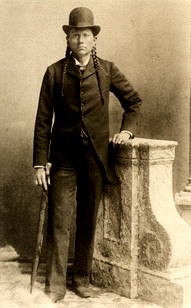 "I am the Parker party," the Comanche said. He extended his hand to shake. "My name is Quanah Parker." McCauley stood there stupidly for a second, just staring. As the Comanche started to drop his extended hand, the white man snapped out of it and quickly grasped it, pumping it enthusiastically. "Bill McCauley, at your service, Mr. Parker." He started talking a mile a minute, trying to cover his faux pas. "I've been instructed to escort you to our best hotel and provide whatever you might need. My superiors have also told me that President Roosevelt would like us to give you a tour of the mining operations here, and, if you would like, after you've rested and had something to eat, I could give you that tour this afternoon or whenever -" The other man unexpectedly put his hand gently on McCauley's shoulder. "Mr. McCauley?" "Yes?" "It's alright. Shall we go?" McCauley looked into the blue eyes again and saw a friendly understanding. It relaxed him and he smiled sincerely for the first time, turned, and started walking down the platform to the waiting wagon that would take them into town. "Please. Right this way. I think you'll like your accommodations. The Montana is the finest hotel in the territory. It was built ten years ago when . . . " 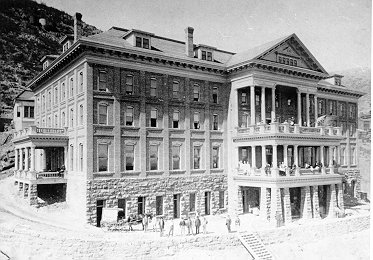 He continued talking and being the gracious host until they walked up to the registration desk at the luxurious hotel. McCauley was a step ahead of Parker, knowing full well that the desk clerk's reaction to the Comanche would be much worse than his had been. The clerk, a Henry Blackstone, a small tidy man with a small prim mind, ran the Hotel's reception operation by the book. Rules were his religion. It was why he was hired. McCauley knew this. From behind his wire rimmed glasses, the clerk eyes lit up with anger and indignation. Indian weren't even allowed on the grounds of the Hotel, much less inside. It could mean his job. He pointed at Parker. "You! You can't-" McCauley interrupted him. "This is Mr. Parker. He is a guest of the company and a personal friend of the President, Henry." He recognized McCauley immediately and therefore realized that he had to do what he was told, but he was, never the less, stunned. "A friend of Senator Clark?" "No. A friend of President Roosevelt." The clerk looked at McCauley as if he was speaking Swahili. His mind couldn't take in such an impossible notion. McCauley tried prompting the clerk. "I reserved the Presidential suite for him a little over an hour ago?" The clerk reluctantly came out of his disbelief, but a look of distaste lingered on his face as he snapped his fingers at a bell boy and handed him the key to the suite. "Show our guest to his room." The suite was the epitome of luxury. It even had its own marble covered bathroom with gold faucets and crystal door handles. It's four of its eight windows looked out on the town and valley below. The other four looked north toward the smelter and its smoke stacks. McCauley watched as the Indian surveyed the room and then walked over to the large windows and looked out at the smelter. The bell boy was lingering at the open door, waiting for his expected tip. McCauley shooed him silently out of the room. He was sure that the Indian wouldn't know anything about tipping. Actually, he realized that he had no idea what the man knew. He hadn't said a word since they had left the depot. It dawned on McCauley that he had talked so much that he hadn't given the other man a chance. "Mr. Clark - he's the general manager of the company - would like to meet you after you've rested and had something to eat. Senator Clark, the president of the company, would normally greet you, but he's in Washington right now. Is there anything I can get you? Something to eat or drink. Mr. Clark said that the company would provide for anything that you might need." He gave his next word a special emphasis. "Anything." The Comanche turned from the window and started walking toward the door. "Let's not keep Mr. Clark waiting." McCauley almost jumped, keeping up with the other man, as they walked down the hall, down the stairs, and out of the building. They climbed into McCauley's carriage and wound their way down to the main part of town and out to the company's offices. McCauley noticed that the Indian seemed to be taking in everything. He sensed that there was a very keen intelligence operating behind those icy blue eyes. He decided to let the town speak for itself and remained silent throughout their short trip to the offices. He wondered if Mr. Clark was aware of his guest's race. He did not have to wonder for long. The look in the general manager's eyes told him everything. As they walked into the office and Mr. Clark stood up from behind his desk, his eyes went wide with ill contained shock and then whipped over in McCauley's direction with a look that said, "We'll talk later about why you didn't inform me that our guest was a damned Indian!" As the introductions were made, Clark composed himself and turned on an unctuous charm that McCauley had never seen in the man before. It was nice to see his smug boss kowtowing to someone else. Especially an Indian. He could barely contain his amusement. The meeting did not last any longer than necessary. McCauley knew that Mr. Clark wanted the savage out of his office as soon as possible. Mr Clark finished it up with a large insincere handshake and smile. " . . . and so, Mr. McCauley will show you around the facilities. He is conversant with every aspect of our operations, and therefore, will be able to answer any questions, technical or otherwise, that you might have. I hope you have a good time in our town, and as I said, it's all on the house. A friend of President Roosevelt's is a friend of the United Verde. Anything you want, you just ask. Anything." McCauley saw Mr. Parker smile faintly and look over in his direction when Mr. Clark repeated the word "anything". McCauley returned his smile and suddenly felt as if they were sharing in their amusement with Mr. Clark. They were ushered politely out of the office and out of the building. When they were outside, McCauley turned to the Indian. "Is there anything in particular that you would like to see first, Mr. Parker?" "No," said the Comanche, "This is all new to me, Mr. McCauley." He looked across the way to the belching smelter. "Perhaps we could start at the beginning. Down in the earth where the copper lives." "That's just what I had in mind. Good. I wonder if you might excuse me for a minute, however. I need to use the facilities." "I'll wait right here," responded the Comanche. Quanah watched the white man go back into the office building and then turned back and surveyed his surroundings. It was not the first time that he had been this close to the kind of enormous things that these people built. He had been to Teddy's inauguration in Washington D.C. and seen the huge monuments, governmental buildings, mansions, roads and bridges. He knew what they were capable of. But this was something else. He looked across the way to the assortment of large structures that made up the mining operations. It looked like someone dumped a series of buildings in a pile, stuck a few large smoke stacks here and there, curled a railroad around the top of it, threw a few thousand men at it, and flipped a switch. But he knew that it probably ran like one well oiled machine. The thing that struck him most, however, was the fact that no matter where he looked he could not see one growing thing. Apparently, the smoke from the smelter had killed every tree, bush, reed, and blade of grass in the surrounding area. Every living plant had been exterminated in the white's pursuit of progress. McCauley came out of the building and down the stairs. "Shall we go?" They climbed in McCauley's rig and started heading out of town to the north on a dirt road. Just past the office complex, they turned right and headed downhill. "We have to go down to what we call the 500 level. That's where the mine's tunnels start." They wound their way down and around to the left and came out in a wide, flat, semi-circular area that housed several large yellow brick buildings. Several score of men hurried about between the buildings and a large gaping hole in the face of the mountain. "Those are more mining offices," shouted McCauley over all the noise, "and that one over there is the shower and locker building where the workers can get cleaned up after their shifts. There are three shifts, eight hours a piece. The mine never shuts down." They pulled up to one of the office buildings and climbed out of the carriage. A stout, middle-aged Mexican stepped from the building and approached them. He was dressed in stained overalls and wore a miner's cap with a carbide lamp on the front. "Senor McCauley. Buenos diaz." The Mexican's gaze stopped on Quanah. They both recognized the tribal blood in each other - and the European. Miguel smiled in what appeared to be admiration that a half-breed like himself was being so honored. "Hola, Miguel. This is Mr. Parker. He is a guest of the company. We are showing him the mine. Would you please come with us?" McCauley immediately started walking toward the hole in the mountain's face. 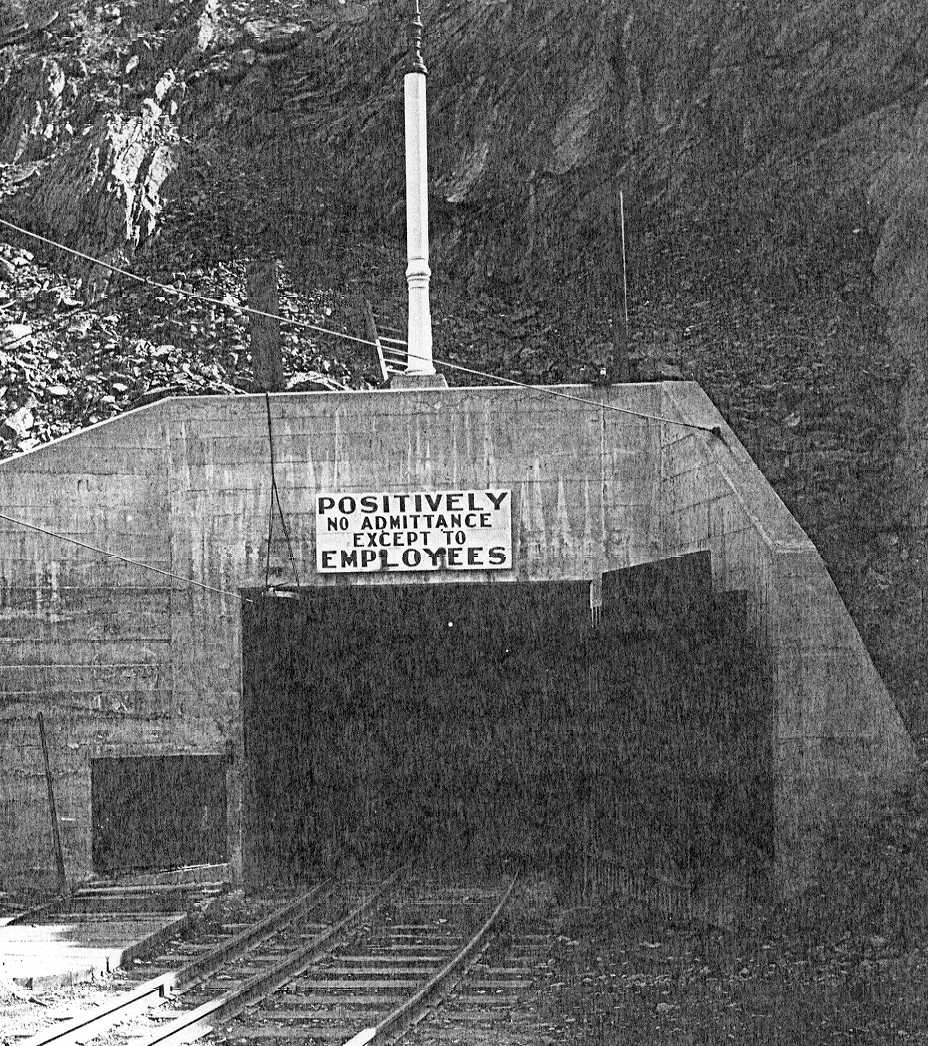 "Yes, I think that would be the best thing." He turned to Quanah. "The trolley is what they call the car we use for this kind of tour. It's motorized and has padded seats." Just outside the mouth of the tunnel sitting on a short spur of the railroad tracks coming out of the mine was what appeared to be a metal ore cart that had been converted into something that could carry people in relative comfort. Miguel threw a brakeman's switch, cranked the cart's engine to life, climbed aboard and drove the cart onto the main line going into the mountain. McCauley and Quanah climbed in and drove into the darkness. Quanah had been in caves before, and he had ridden in motorized vehicles before, but this was truly a new experience. The cave was man-made. It was lit with kerosene lamps. It was supported with large timbers. There were men walking back and forth. And it seemed to go on forever. His native sense of direction told Quanah that they had driven in the direction of the smelter and were now probably a few hundred feet below it. Other tunnels branched out in different directions. Men with picks, shovels, and hydraulic jackhammers were cutting rock out of the sides of the tunnels and loading it into ore carts. The men did not seem happy in their work. Their dull eyes told him that they were just waiting for the shift bell to ring. They reminded Quanah of caged animals. 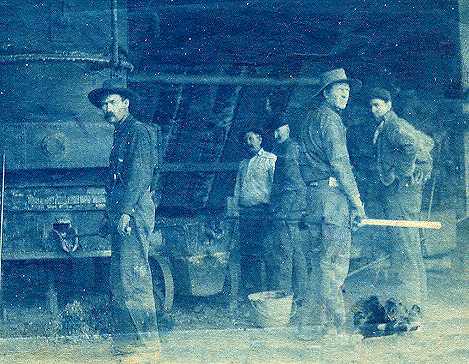
As they moved along, McCauley shouted over the noise, trying to explain every detail of the operation to Quanah. But his voice was being drowned out in a rising tide of other voices. As the rounded a corner to their right, they entered into a large cavern. Quanah couldn't tell if it was natural or man made. He didn't get a chance to examine it further. The cacophony of voices was becoming louder and more urgent. An unearthly glow was coming from a large tunnel at the opposite end of the cavern. Men were running out of it in panic. Three or four of them ran up to the trolley, all yelling at once. They were all yelling at Miguel in three different languages. Quanah heard the words "cave-in" and "fire" a few times. Miguel and McCauley jumped from the wagon and started running toward the brightly lit tunnel mouth. McCauley stopped and turned around. "Mr. Parker, please, stay right there! I'll be right back!" He turned and ran toward the tunnel. Quanah jumped out and followed them. When they reached the twenty foot high mouth, Miguel grabbed one of the men coming out and started yelling at him in Spanish. The man yelled back, obviously explaining what had happened. Miguel yelled at him one more time, appearing to give him some kind of instructions. The man nodded in understanding, turned, and ran from the mine. Miguel started translating to McCauley as Quanah reached them. "It's the fire! It surged again! Found a new pocket of sulfides! It burned through the floor of the tunnel and it collapsed. Could be a dozen or more men in there!" McCauley suddenly noticed Quanah. "Mr. Parker! You've got to go back to the cart! I'll have one of the men take you out!" At that point, he was interrupted by a burly, bull-shouldered miner stood a good five inches taller than Quanah. "Mr. McCauley, there's maybe half a dozen men still alive! We got to get in there! If this nearer section goes we won't be able to get to them!" The big man grabbed the company executive by the shoulders. "Let's go! It now or never!" McCauley's eyes lit up with understanding. "Miguel! Let's go!" They turned and ran into the glowing tunnel that was now beginning to fill with smoke and dust. Quanah went with them. A hundred yards down the ever shrinking shaft they came upon the hole. It glowed an eerie greenish color. They could hear the screams of the men trapped in the rubble below. It was as Miguel had said - the floor to their tunnel had collapsed into the one below it. The rock was hot to the touch and had an almost soft feel to it. Most of the fire had been snuffed out by the collapsing debris and dust, but further down the abandoned lower tunnel, Quanah could see the fire burning, starting to make its way back in their direction. McCauley shouted at one of the men still there to go get ropes and ladders and first aid equipment. At the moment, there was nothing that they could do. They couldn't climb down to the men, because it was a sheer drop of thirty feet onto a pile of broken up rock. They could only stand there, looking over the edge, listening to the men scream. Both Miguel and McCauley shouted down words of encouragement in Spanish and English. It seemed to take forever for the men to return with equipment. When they finally did, all they had was rope. McCauley grabbed one, strapped it around his waist and had the men lower him down onto the pile of rubble. He immediately went to the man nearest him who was pinned under a large bolder and attempted to move the rock. It wouldn't budge. Quanah took a rope from a man and strapped it around his waist as he had seen McCauley do. Miguel tried to stop him, but Quanah wouldn't let him. "Organize a team to haul the injured up! We'll prepare them!" Miguel motioned for the men to lower Quanah down. As soon as he was down, he slipped out of his rope and made his way over to McCauley. Without speaking he began to haul against the rock. McCauley, seeing that he had help, leaned even harder into the task. The rock gave and rolled off the injured miner. The man howled like an animal when the bolder rolled away. In the weird green light, Quanah could see that both of his legs were deformed. The man continued to scream as they lifted him out of his prison and strapped a rope to his chest and waist. He kept on screaming as they pulled him up to the higher tunnel. It was hot and getting hotter as Quanah and McCauley started freeing another injured miner and sending him up top. The screaming wouldn't stop. There were men trapped and dying who they would never be able to get to. They did what they could. They saved the savable and tried to blot out the rest. Then suddenly, there were other men with them. The men wore some kind of safety turn out and helmets that read "Jerome Fire Dept." Their shirts were emblazoned with the letters JFD. They came down thirty foot wooden extension ladders. They worked as a team communicating in short bursts of yelling and silent sign language. Quanah looked over to McCauley and realized that his host was one of them. There was no doubt by the way he communicated with the firemen. They all started working with a renewed strength. They were able to save an additional four men. All the time it kept getting hotter and hotter as the fire moved toward them, burning the rock itself. One of the firemen, closest to the approaching fire, suddenly collapsed. His team mates grabbed him, and one of the biggest of them carried him up a ladder to safety. It was getting unbearably hot. Quanah was shielding his face with his derby. His body was wet with sweat. One of the firemen approached McCauley wincing from the heat and coughing from the smoke. "Captain! We better get out of here!" McCauley looked around. Men were still screaming. A sudden blast of heat forced him to step backward toward the ladders. "Let's go!" he yelled, "Everybody out! Now!!" The men pulled back and scrambled up the ladders, the heat licking at the backs of their legs. After they had all made it to the higher tunnel, they started to pull the ladders up, but it was too late. The ladders were already on fire. "Everybody pull back!" yelled McCauley. Then all the men made a run for it. They came out of the mine into the bright sunlight, coughing, gagging and throwing up from the smoke and the chemicals it contained. Their clothes were torn. Their faces were black. Quanah looked around and realized that he couldn't tell who was white or mexican or indian. Hospital wagons had arrived. Nurses were tending to the injured that they had already sent up. Other nurses were going around to the newly arrived rescuers, checking them out, offering them water. Quanah took a ladle of the water and drank it down. Water had never tasted so good. He saw McCauley talking to a group of men that appeared to be made up of firemen and men in suits. McCauley finally freed himself from the group and came over to Quanah. As he saw Quanah's disheveled appearance his face sank. "Mr. Parker, I am so sorry. If I had had the faintest idea that something like this - " "Please," Quanah interrupted, "I'm fine." "But - I mean - I can't believe - " "Are you alright?" Quanah asked, interrupting again. The question stopped McCauley in his tracks. He looked quickly at himself. He, too, was torn and bleeding and filthy. He looked back to Quanah. "Yes, I think I am. Thank you." "Is there anything else I can do?" asked Quanah. McCauley stared at him quizzically. "Mr. Parker - " He didn't quite know what to say. As he looked into Quanah's blue eyes, surrounded by black ash, he saw a man who was a man when it counted. He extended his hand. "You have my utmost thanks and respect." He smiled slightly then. "Now, let me get you back to the Hotel before any of these big shots see what I've done to you." That night, on the soft mattress, under a fluffy feather down comforter, scrubbed and washed clean - he dreamt. He was back on the plains. He was fifteen. It was his first buffalo hunt as a man. He was on the smooth barrel back of his favorite horse, Stands in Water. They were running flat out along the flank of the herd. He let out a long war cry, and then he laughed. It was a laugh of joy. When he looked down at the earth passing under his pony's feet, he saw that the grass was on fire. That wasn't right. He stopped and jumped off his horse and watched as the fire raced ahead of him toward the horizon. The buffalo had turned into horses and were running away from him along with the flames. The horses had riders. They were white men. They had guns. They were running toward his father's village. Running toward the camp with the fire. Quanah's pony was gone. He ran after them on foot. The men and the fire swept through the village at the same time. He saw his mother running after his younger sister. Three men jumped off of their horses, grabbed his mother, threw her across the saddle of one of their horses, remounted and ran out the other side of the village. His father, seeing all this, jumped on his horse and ran after the kidnappers. Quanah tried to run forward, tried to stop the white men. The faster he tried to run the slower he went. His feet wouldn't touch the ground. He had to stop it. He couldn't let this happen. But every time he tried to stop it, he was never able to reach the marauding Texas rangers. He wasn't fast enough. He wasn't strong enough. As he watched his father race after the white men, he saw one of the them turn around in his saddle and shoot his father in the head with his pistol from ten feet away. He watched as his father fell slowly into the tall flames and disappeared. Once again, and like so many times before, Quanah lurched out of bed in a cold sweat, breathing hard, his heart pounding. It never got any better. The dream had haunted him his entire adult life. It took him a long moment to orient himself - to remember where he was. He walked over to one of the tall windows looking out toward the smelter. The stacks were still spewing black murderous smoke over the town and the mountainside. Flames belched from the top of the stacks. Shadowy men, backs bent from fatigue, scurried around the buildings, servicing the machines that they had built. The machines moved to and fro, pumped up and down, went around and around, vomiting ore from the tunnels, feeding it into the heart of the beast where it was melted down into deadly white hot liquid metal with which they could build more machines. As he stared out the window, he realized that he was looking at a nightmare to which his paled in comparison. It looked like a scene out of what the whites called Hell. These white men had no idea what they were doing. Their pride and their greed blinded them to the consequences of their actions. 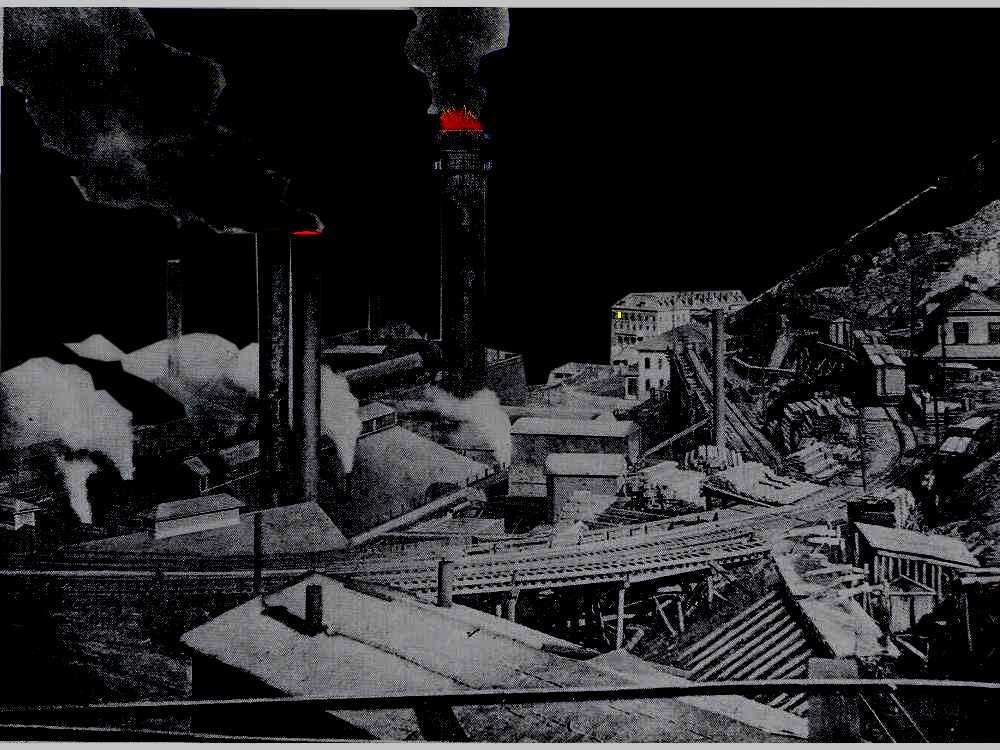 This was just one mine of countless mines they were gouging in the earth. It was just one in countless industries that destroyed the air and water and earth upon which they depended for their very lives. Were they mad? Had they no concern for their grandchildren? Or were they just stupid and believed that the earth's bounties were limitless. Quanah did not know. He only knew that if they continued in this madness that it would eventually destroy them. When Teddy offered him his personal car and said that he wanted his friend "to see the white man's industry up close and learn from it," Quanah was quite sure that the President wasn't thinking of this kind of lesson. It made him sad. Life used to be so simple and beautiful. The tribe followed the herds and the seasons, moving through generation after generation in a natural rhythm. They lived with the land. They didn't try to force it into something it was not. But since the coming of the whites, life had become painfully complicated. He walked into the spacious, marble walled bathroom with its large mirrors, counters, and bath, lifted a large, clean, dark blue towel from a gold rack and dried the sweat from his naked body. In the darkened room, he could see his reflection in a large mirror. He still had the body of a warrior, even though he was a grandfather many times over. He was glad now that he hadn't brought any of his wives. They would have both worried over him and been angry with him for risking his life for that of a few whites. He chuckled when he thought of his wives and his children. The thought of them took away his sadness. He felt a great relief that he had been able to help the tribe make the transition into this new, albeit confusing, world. Their new situation was far from perfect. Everyone, including himself, would have much preferred the old ways, but at least they were in a better situation than most of the tribes. He had seen Geronimo and his Apaches when they came through Fort Sill. They were a beaten people. They had nothing. No land. No horses. No lodges. All they had left was despair. The same was true for most of the other Plains tribes also. They were not able to change, so they suffered terribly. He was trying to help the other tribes, but he realized that it was a daunting task. Old traditions and rituals and habits and ways of thinking become crystallized in a people. It creates a rigidity that cannot bend but only break. He also realized that if it were not for the fact that the old female yaqui curendaira fed him peyote tea for two weeks when he fell deathly ill at his mother's family's ranch right after he brought the people into the reservation that he, too, may have fallen into the same black hole with the others. It was only after having his mind opened by the peyote that he was able to see the larger picture. It was only then that he was able to drop his own useless pride. It was only then that he realized that he could play the white's game and win - not only for himself - but for all the people, including his worrisome wives. He chuckled again when he thought of his wives. He remembered the Secretary of the Interior congratulating him at Teddy's inauguration in Washington D.C. The Secretary was praising him for bringing his people into the modern world. Quanah remembered how people around them seem to lean forward when they heard those words. Especially the fancy white women with their silly hooped skirts and their satin and lace. However, the man said, there was still one problem. Quanah asked him what that problem was, and the Secretary said that Quanah was going to have to go back to the reservation and tell all but one of those wives that they had to leave. Quanah thought of the women who had chosen to be with him. The women who had survived the wars, the winters, the starvations. The women who had given birth and raised the children. The women who didn't hesitate to straighten him out if he strayed from the path. He looked at the Secretary, smiled, and said, "You go tell them which ones have to leave." He looked in the mirror again. By the whites reckoning he must have been in his late fifties. So much had happened in those years. He had gone from a simple, Comanche boy, riding free on the vast and untouched plains to a vengeful, violent warrior seeking nothing but death for the invaders - to a millionaire in a broadcloth suit. He shook his head. There was no understanding it all. There was only the living of it. The flowing with it. The gray twilight of dawn was creasing the edge of the east. He could see the silhouette of the cliffs far across the valley. It would be hot today and the sun would stay in the sky until late evening. This was a big day for the whites. It was what they called Independence Day. Later that morning, McCauley showed up at his door. His hands were bandaged in white muslin. There were small blisters on his cheeks. There was no way to tell exactly when he had gotten burned during the incident, but Quanah's respect for him grew when he realized that his burns had not stopped him from helping the injured and trapped men. He walked over to his luggage as McCauley invited him to breakfast and said that there was a friend of his who would like to meet Quanah later. He pulled out a leather pouch, opened it, and removed a single shaft of a green cactus succulent. He asked McCauley to sit at a chair next to a round oak table over by the windows. "I have something here that is good for burns. Let me see your hands." McCauley looked at him in surprise and doubt. "Please," said Quanah, "Trust me." McCauley placed his hands on the table and Quanah unwrapped the gauze from them. Both palms were severely blistered. With his fingernail he split open the succulent, revealing a clear, juicy pulp. He then began to gently apply the viscous substance to McCauley's burns. The white man felt the soothing effect almost immediately. As he applied the aloe vera, Quanah spoke. "How many men did you lose yesterday?" the Comanche asked. "We're still not completely sure, but it looks to be about six or seven," McCauley replied. "I'd like to ask a question, but I am not sure if it would offend you." "That's alright. Go ahead." "You lost seven members of your community yesterday in your efforts to dig copper out of the mountain." Quanah looked closely into the other man's eyes, wanting to know his true reaction. "Was it worth it?" As he watched the man react, Quanah realized that he had never even considered the question before. McCauley's mouth opened, searching for something to say. The half Comanche/half white man could see the rationalizations spinning around in the man's mind, behind his eyes. Could see that, as they were examined, none of them were adequate. McCauley gave up, returned Quanah's gaze, and shook his head. "I don't know." "I'm sorry," said Quanah, starting to rewrap the burned hands, "It's really none of my business . . . " The other man looked at him curiously, not knowing what to say. It was Quanah's turn to offer an encouraging smile. "Come, let us go get that breakfast." After they had eaten at the hotel's restaurant, they walked down a steep cobblestone street to the main commercial part of town. The streets were filling with people dressed in their finest, getting ready for the big parade at noon. McCauley led Quanah down some steps and up to the front door of the local Fire Department. 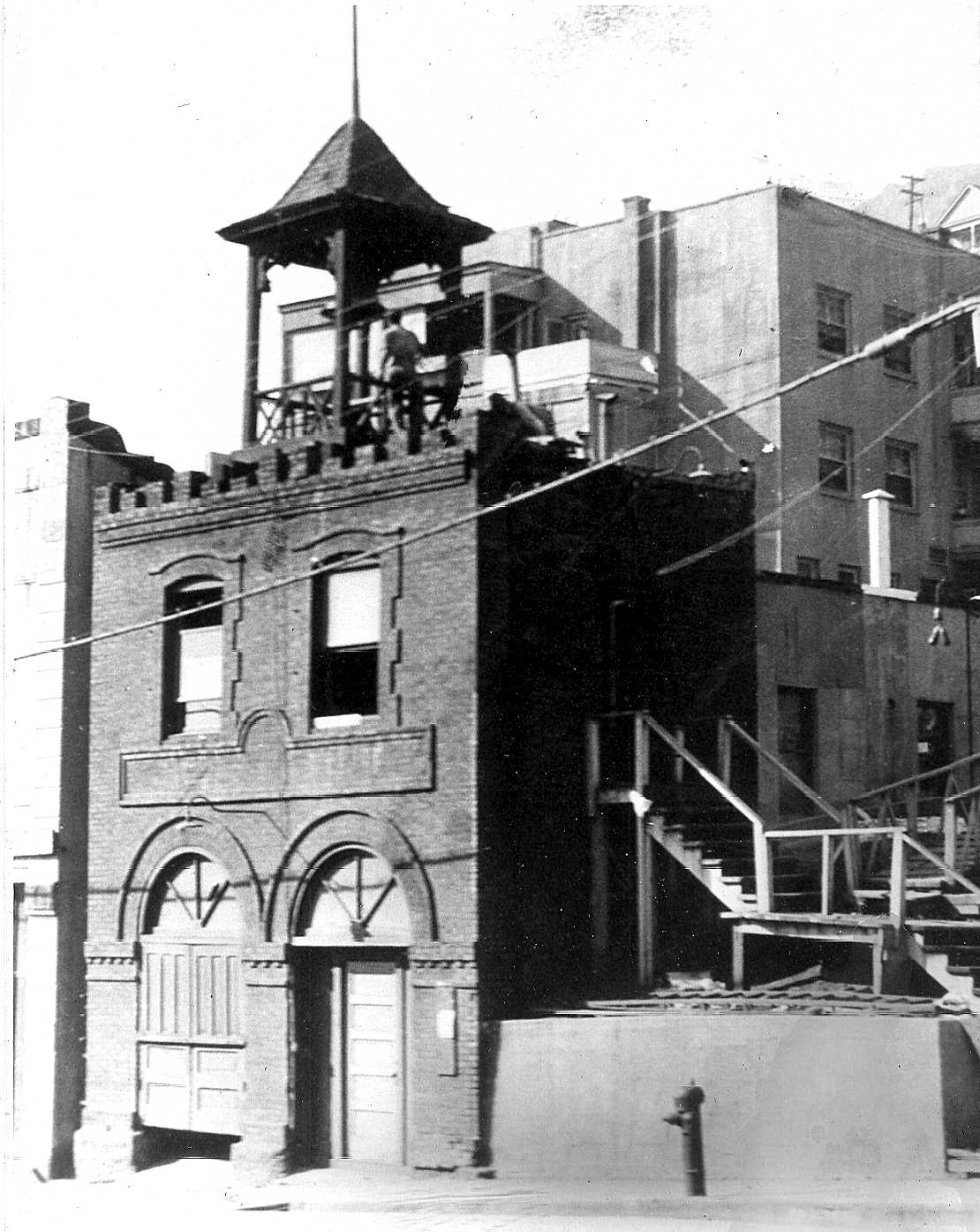 "The Chief wanted to meet you, Mr. Parker." "The Chief?" asked Quanah. McCauley laughed when he saw the other man's confusion. "That's what we call the head of the Fire Department." Quanah's eyes lit up. As they walked in the office, a small but intense man wearing a cowboy hat and boots stepped from behind the desk and came over to them, extending his hand to Quanah. "Mr. Parker. It's an honor. I heard what you did yesterday. I would like to thank you for both the Fire Department and the community at large." He stood there sizing up the Comanche, before he remembered himself. "Oh, I'm sorry. My name is Val Harris." "Pleased to meet you.," responded Quanah, "As far as yesterday," he looked over to McCauley, " - we just did what had to be done." "Spoken like a fireman," smiled Harris. He, too, looked over to McCauley. "What do you think, McCauley?" McCauley smiled and nodded. "Steady as a rock, Chief," he said, "You should have seen . . . " But McCauley's voice faded as Quanah looked out the door and saw the crowd gathering around by the gazebo and down around Main Street. It was a beautiful, sunny day, children playing, a brass band starting to play marching tunes up in the gazebo, flags unfurling in the breeze. He saw a young boy shinnying himself the flagpole for a better view. He looked at the flag of the United States of America with its bold stripes and forty-six bright stars. 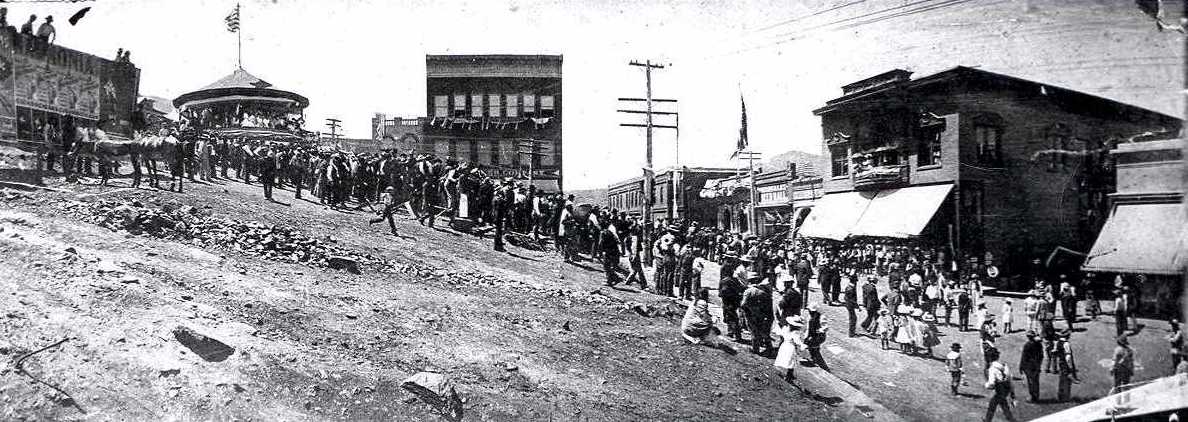 "I thought that you hung the flag at half mast when people died," the Comanche said. The Chief walked out onto the porch and the other two men followed. "Only important people," he said with a look that Quanah couldn't read. "Besides, we got direct orders from Mr. Clark not to put a damper on the celebration." He looked out on the crowd with a protective eye and waved to some friends. Two hours later, Quanah looked one last time at the smoking smelter, as the afternoon train pulled out of town, heading for Jerome Junction and President Roosevelt's private railroad car. Even though he was half white, he doubted if he even half understood them. They seemed like precocious, spoiled children - brilliant in their ability to make machines but too immature to take responsibility for the destruction that their creations generated. How could the Spirit from which all this was made have allowed this to happen - have allowed these people to dominate the earth? It was a mystery. He thought of his mother, Cynthia Ann Parker, who had always been warm and loving and encouraging, up and until the final moment when the whites stole her. She had taught him what it was to love and to care. He must remember what she taught him, he told himself. Everyone has the spirit within them, even these people. As he looked up ahead at the oncoming tracks and into his own future, he realized that, although he would continue and prosper in the white way - and help his people prosper - although he would live like a white man - He would die a Comanche. 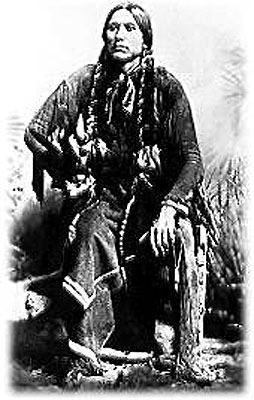 Quanah Parker died in 1911 with seven wives, twenty-five children, a forty room mansion, part-owner of a railroad (The Quanah, Acme, and Pacific), judge, millionaire, and friend and adviser to a President. He also established The Native American Church, the only church legally allowed to use peyote as a sacrament. He and his tribe were never been beaten by the U.S. Army. He only surrendered at Fort Sill in 1875 because of the government sanctioned annihilation of the buffalo. From 1865 to 1875 thirty million buffalo were killed, effectively wiping out the food source for the Plains tribes. After Quanah died, the Comanche tribe voted to designate him, "The Last Chief of the Comanches". 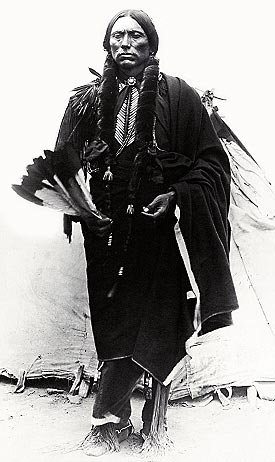 "Resting Here Until Day Breaks And Shadows Fall and Darkness Disappears is Quanah Parker Last Chief of the Comanches Born - 1852 Died Feb. 23, 1911" For More Stories About Jerome Click Here Author's e-mail Home |